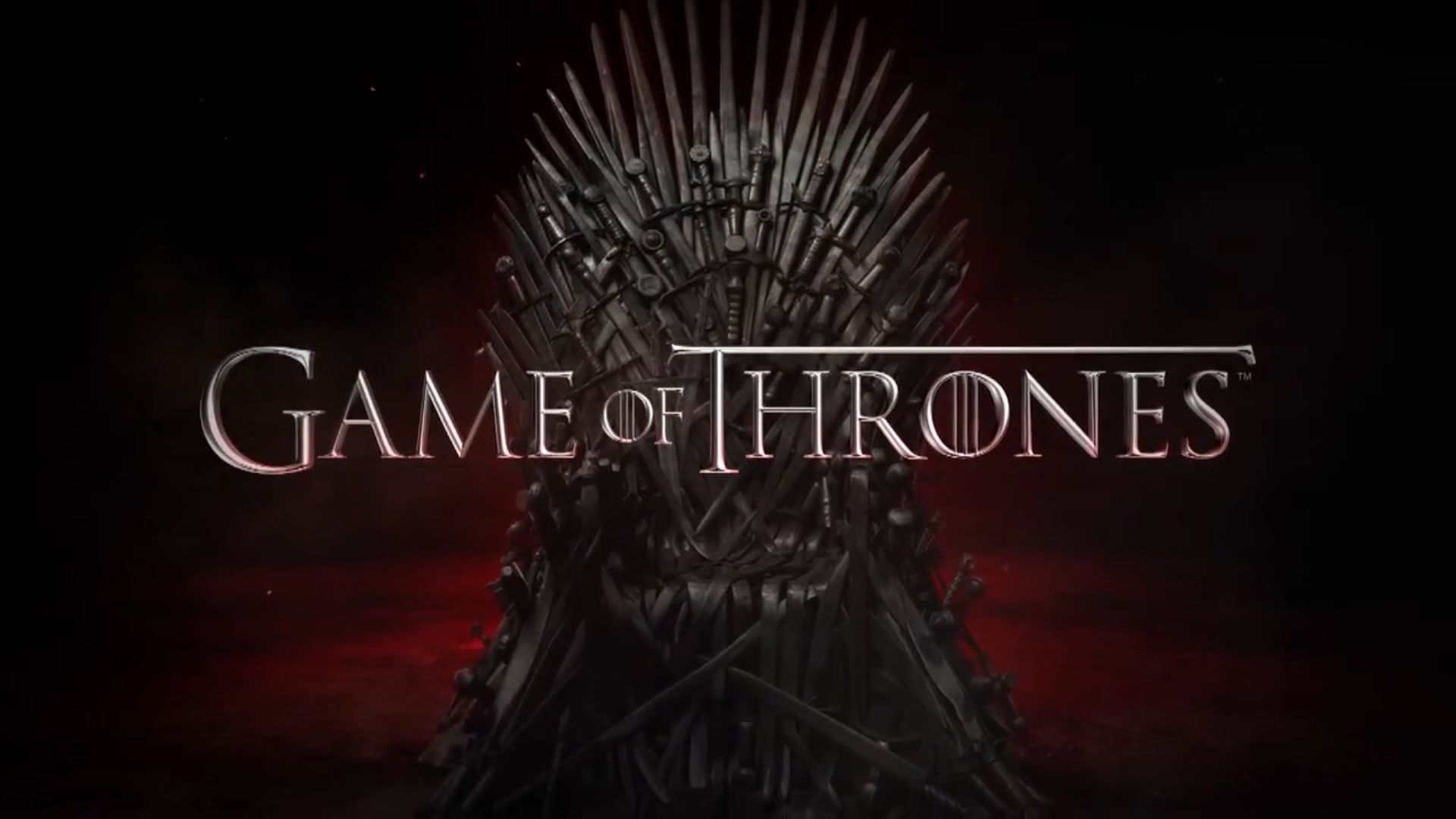
The Theorist: Is Game Of Thrones Rewriting Film History?

game-of-thronesBy Spencer. If you’re interested in film history and like the idea of a college-level survey course on the topic – without any of the homework or exams – let me suggest Mark Cousins’s 15-part documentary series, The Story Of Film: An Odyssey (also available for streaming on Netflix, I believe).

Starting with the earliest silent pictures of the Lumiere brothers and Georges Melies and moving all the way through the digital film era of today, The Story Of Film: An Odyssey does a remarkable job pointing out all the little innovations over the years that, to the more casual moviegoer, are hiding in plain sight. I learned the very basics of composition – how cuts were first used to let the viewer know that two scenes in different places are connected by story; how close-ups and deep focus shots change our sense of scope; how directors actually had to learn over time such seemingly obvious concepts as orienting their shots so that two people speaking to each other in close-up are, you know, facing each other – and I earned my first introduction to such historically-groundbreaking (and often forgotten) films as Battleship Potemkin, Sunrise, The Bicycle Thieves, The Third Man, and Breathless. I learned about the technical innovations that gave rise to Citizen Kane’s tremendous reputation, the shift from fantasy to gritty realism that took place in the 70s with films like The French Connection or Chinatown or The Last Picture Show, and the criminally uncelebrated contributions of the film industries of China, Russia, India, Japan, South America, Poland, and Africa. And for the first time, I started to get my head wrapped what filmmaking represents as a single historical project: a universal language evolving piecemeal through the collective influence of generations of innovators, speaking to each other from every corner of the globe.

Which brings me to Game Of ThronesContinue reading

The Critic: Coldplay’s Ghost Stories and The Black Keys’ Turn Blue

Coldplay_-_Ghost_StoriesBlack_Keys_Turn_Blue_album_coverBy Spencer. Neither band was supposed to get this big. When Coldplay started out, they were Radiohead Lite, with maybe a dash of U2’s soaring theatrics. When the Black Keys started out, they were just another in a long line of garage bands; even their name suggested a White Stripes ripoff. Since then, they’ve each taken their turn as the biggest band on the planet, and (some would say) they’ve both lost their edge.

Now they’re both back with new albums: Coldplay’s Ghost Stories and the Black Keys’ Turn Blue. Do the titles suggest a certain defensiveness – an acknowledgment of sorts that their reputations are in decay? Or are they flipping a sarcastic middle finger at the critics who may have prematurely written them off?  Continue reading

The Editor: Welcome To Shadows & Noise

cropped-img_1212.jpgThe picture you see above you was taken on the isle of Lunga, about an hour off the western coast of Scotland; it’s the closest I’ve ever come to the feeling of standing at the edge of the world. What this has to do with music and movies – the two subject matters of this site – may not be obvious. But just as a map is defined by its boundaries, so too is art. It’s only at the edges where we can get a sense of the whole; where we can stand at the horizon, turn back and look inward, and appreciate just how far we’ve come. And at the edges of film and music, there are shadows and noise.

I’ve been a consumer of pop culture my whole life, and yet it is only now in my thirties that I think I’m beginning to understand it. For most of our history, our work was what defined us, but in the past couple of generations a shift occurred – now it’s our entertainments that do. The line separating mere diversion from art is so blurry that it’s no longer worth recognizing.

And so it is that an album like Radiohead’s Kid A or a movie like There Will Be Blood, for all of their overbearing ambition to mean something, are still a form of fun to us. Better yet, it’s also true (and I will fight to the death anyone who insists otherwise) that there’s a deeper merit hiding under much of what is dismissed as disposable pop fluff – from the music of Foo Fighters and Lana Del Rey and Jay-Z to movies as diverse as Swingers, The Avengers, Silver Linings Playbook, The Empire Strikes Back, or even the Fast & Furious series.

So if this blog has a mission statement, it is this: to serve as a conversation space about music and film that takes seriously both the fringe and the mainstream of our two greatest art forms. To engage equally both the experimental and the lowbrow. To be pretentious at times, and also to flip the finger at that sort of thing. To start at the edges, but to never stay there so long that we lose sight of the whole.

This site is a passing of the torch of sorts, jumping off where my good friend Antony’s earlier site, After The Radio, left off. I hope that some of the contributors to that site will stop by S&N from time to time to offer their voices, for I have truly enjoyed the conversation we have had over the past three years. And by expanding the scope beyond music and into film, too, I hope that we can have an even broader conversation about how our pop culture consumption shapes us, entertains us, makes us feel and gives us purpose – in short, how it connects us. Both to each other and to ourselves.

So read. Comment. Contribute. Consume. Engage. Because by doing so, you help it all mean just a little bit more.