The Projects: The World Cup Of Cinema – The Final Rounds

gn3_1769270615

By Spencer. After four grueling weeks of group play face-offs, it’s finally time to crown our S&N World Cup Of Cinema champion! For those who need a refresher on the rules, you can find them here. For a broader introduction to the films we’ll be looking at, check out Group A, B, C, & D. Today, our four top pictures will face off in semifinals matches, and then we’ll select our champion! Continue reading

The Conversationalist: Which 21st Century Films Are The Classics Of Tomorrow?

filmhistory1
By Spencer & Sumeet. In this week’s Conversationalist, Spencer and Sumeet get into a little modern film history with a discussion about which films of our generation will be the ones that really matter.

Spencer: Distance offers perspective. So the closer in time you are to a piece of art, the harder it may be to judge its lasting worth. Sometimes you need years or even decades to appreciate a film, whether that’s because it was a work that was ahead of its time, or whether its just that the longer it resides in your memory, the more it stands out in comparison with what came next. Don’t believe me? Take a look at the list of Best Picture winners over the past few decades. How many movies on this list are utterly forgettable with the benefit of hindsight? The King’s Speech. Crash. The English Patient. The Last Emperor. Oliver. How Green Was My Valley.

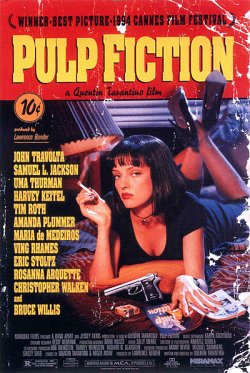
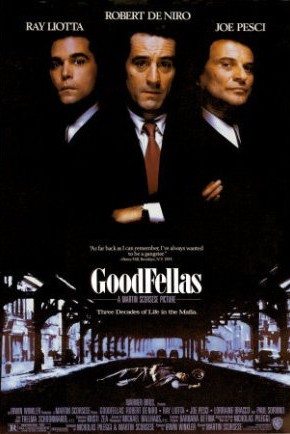
Meanwhile, here’s some films that lost the Best Picture Oscar (or weren’t even nominated): Saving Private Ryan. Pulp Fiction. Goodfellas. 2001: A Space Odyssey. Vertigo. Chinatown. The Treasure Of The Sierra Madre. F—in’ Citizen Kane!

So I recognize that in 20 or 30 years the movies we discuss here might seem laughable. But we’re far enough into the 21st century that I think we can at least start to ask the question: what are the films from 2000 onwards that, when we look back, will be the most historically important? The ones that are the most memorable, the most influential, the ones that will live on while others are forgotten — the “best” films, for all the ambiguity that term contains? Continue reading

The Critic: First Aid Kit’s Stay Gold

fak2
By Antony.
Nature’s first green is gold,
Her hardest hue to hold.
Her early leaf’s a flower;
But only so an hour.
Then leaf subsides to leaf.
So Eden sank to grief,
So dawn goes down to day.
Nothing gold can stay.

First Aid Kit’s Stay Gold is, in a way, a long meditation on Robert Frost’s “Nothing Gold Can Stay.” I don’t know if the Söderberg sisters found the poem as a nice way to sum up what they were already writing or if the poem itself opened previously locked doors to them. Either way, as a listener, the album and poem should be taken together, allowed to work on one another in turn. Continue reading

The Consumer: Glass Animals, Alcest, Sturgill Simpson, & Broken Twin

8788640-record-store-photo
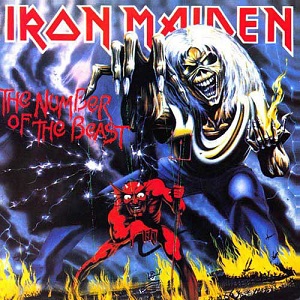
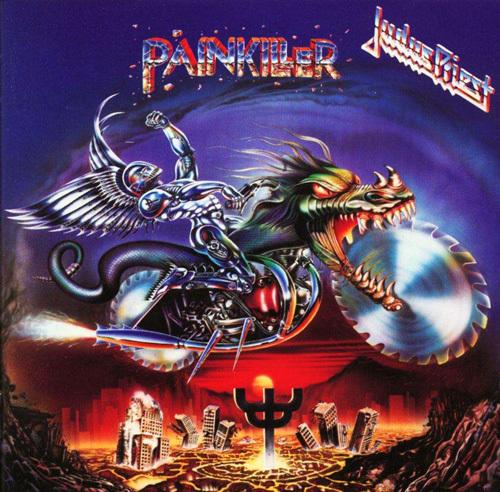
By Spencer. Today, we’re kicking off a brand new feature on S&N: The Consumer. This is a space where our S&N contributors can give a brief sampling of some of the recent releases we’re listening to right now — not full album reviews, just a taste. Today, I’m looking at a few recent favorites from Glass Animals, Alcest, Sturgill Simpson, and Broken Twin.  Continue reading

The Historian: Smashing Pumpkins Discography, Vol. 3 (1996-1997)

SmashingPumpkins-1979By Spencer. If Spinal Tap taught us anything, it’s that rock is all about volume. Looking at the Smashing Pumpkins catalog, though, it’s easy to take a slightly different spin on that lesson. Because to them, volume isn’t just a matter of loudness – it’s a matter of quantity. Their wealth of extra material had already given us the 1994 B-sides collection, Pisces Iscariot, but after a double-album as epic as Mellon Collie And The Infinite Sadness, there couldn’t possibly be leftovers, right? Right?

Just one year later we got our answer. Five discs, thirty-three songs, and a ridiculous Buck Rogers-looking package that put the “box” back in “box set,” The Aeroplane Flies High was a case study in showing off. It was a message to the rest of the music world: the only person who could ever top Billy Corgan was Billy Corgan, so don’t even bother trying. Continue reading

The Projects: The Amateur Comic, Vol. 1 – The Dark Knight Returns

Dark_knight_returnsBy Jeremy. Full Disclosure: I am a nerd and am completely comfortable owning that label. Everyone should be a bit nerdy; it’s a necessary component for being a well-rounded person. There has always existed a stigma around being a nerd, but recently (meaning the last 3-4 years) it has become quite cool to be nerdy.

Television shows like Game Of Thrones and The Walking Dead have broken down the wall and now are fixtures in mainstream media. Historically, the genres of these shows, fantasy and zombies, have been regarded as nerdy. Now the masses have adopted them. The trend is even more prevalent in theatrical films; the popularity of The Lord Of The Rings and The Hobbit trilogies prove that fantasy stories have become cool. And there is a larger steam engine that is driving this movement — comic book movies. Comic books are dominating the box office and this trend is not going to stop any time soon. Christopher Nolan’s Dark Knight trilogy, The Avengers, and X-Men: Days Of Future Past have completely redefined what is popular at the box office. With Disney’s acquisition of Marvel Entertainment, it is expected that comic book movies will continue to dominate.

“The book was better than the movie.” This statement is common whenever a film attempts to recreate the same experience as the book. I remember reading comic books as a kid, but I only had the ability to read issues sporadically. My first exposure to comic book films was Tim Burton’s Batman and I had no frame of reference. I walked away from the film ignorant of the accuracy of the story. Does one really need to understand the original material in order to be entertained? With those questions still in mind, I’ve decided to conduct an experiment: I am submersing myself into reading nothing but comic books for the summer. Continue reading

The Projects: The World Cup Of Cinema, Group B

world-cup-trophy3By SpencerWelcome back to the S&N World Cup Of Cinema! For those who need a refresher on the “rules,” we covered all that last week.

To recap our Group A action, Mexico’s Y Tu Mama Tambien and Ireland’s Once fell early in close but unsuccessful upset bids against two powerhouses, the United States and Russia. In the Quarterfinal match, the United States’ Citizen Kane laid down a thorough 4-1 beating on Russia’s Battleship Potemkin. The United States will now go on to meet the final winner of today’s Group B contests.

Now that you’re all caught up, here are your Group B qualifiers: Continue reading

The Historian: Smashing Pumpkins Discography, Vol. 2 (1995)

Smashing Pumpkins MCISBy Spencer. How do you top an album as big as Siamese Dream? By going bigger. Now most rock stars would have just stopped there, but with Billy Corgan, nothing can ever be so simple. He had to make an album so big that nobody could ever top it. What else could explain a double album so overflowing, so all-over-the-map, and so ludicrously named as Mellon Collie And The Infinite Sadness?

In the fall of 1995, the Smashing Pumpkins reached a crucial turning point from which they could never go back. No, I’m not just talking about Billy shaving his head. Or the unnecessary “the” they added to the front of their name. (Though I’m sure we all slept easier knowing, finally and definitively, that “Smashing” was an adjective and not a gerund). The turning point achieved on Mellon Collie was the completion of Billy Corgan’s lifelong mission to become the biggest rock star in the world. And he did it by simultaneously embracing every caricature of rock stardom – and, whether intentionally or not, every caricature of himself – that he could cram into 28 songs.  Continue reading

The Projects: The World Cup Of Cinema, Group A

fifa-world-cup-trophy_1401332557By Spencer. The beautiful thing about soccer’s World Cup is that it brings together so many diverse peoples over their common love of a single form of entertainment. And we get to see how styles of play can differ so distinctly between countries — Italy flops, Brazil finesses, Germany kills you with precision, and the United States just tries to belong. Well, what’s true of soccer is true of movies. And so over the next few weeks, S&N will be conducting a World Cup of its own: a World Cup of Cinema, looking at the best films each country has to offer and pitting them against each other in a competition that, much like a FIFA match, will be decided mostly by poor officiating and maybe even a little corruption.

Here are the ground rules. A single film will be picked for each country, with that film representing arguably the “best” movie ever to come out of that country — with all of the arbitrary nature that such a selection implies. (Needless to say, if you’re dissatisfied with any of our rulings, feel free to tell us how stupid we are in the comments section — that’s part of the fun of all this!). National eligibility is determined not by filming location or language but by where the film was produced. So, for example, The Lord Of The Rings movies, while filmed in New Zealand, are still American films. Sorry, Kiwis.

Continue reading

The Critic: Lana Del Rey’s Ultraviolence

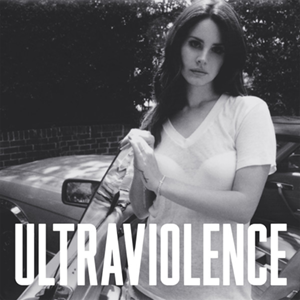
UltraviolenceLDRBy Spencer. It’s not cool anymore to like Lana Del Rey. It was cool for about a month, back when she was blowing up the internet with the song “Video Games” and she didn’t even have an album yet. But as soon as Born To Die was released and she started making promotional appearances, it became immediately apparent that she was actually trying to be cool, and there’s nothing more uncool about that — even if she was doing it ironically, and doing things ironically is the pinnacle of cool. The thing is, Lana Del Rey knows all this. It’s practically all her music is about. And cool or not, her new album, Ultraviolence, stays true to all that Lana Del Rey is while also managing to take a few small steps forward.  Continue reading

The Critic: Noah Gundersen’s Ledges

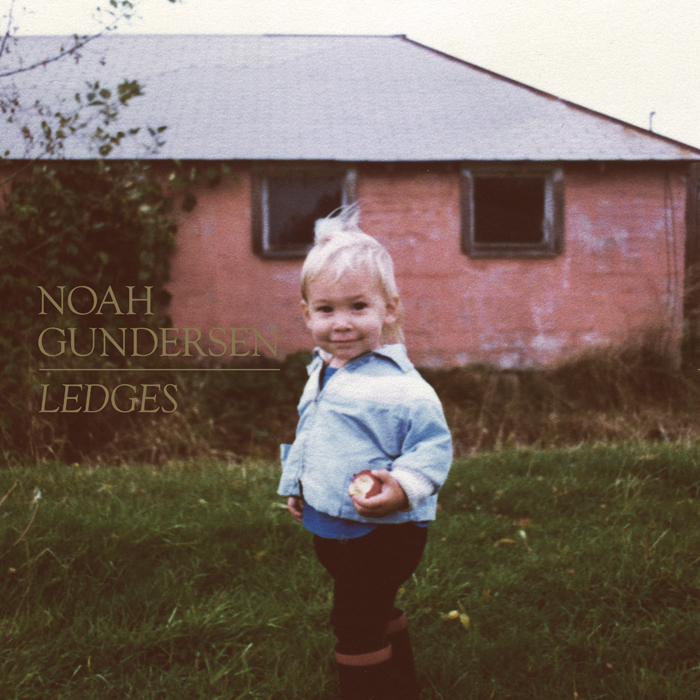
Ledges-CoverLOBy Spencer. “Don’t you wish you could go back? / When your heart sang like a burning branch / When your songs sang themselves from the bottom of a well,” Seattle singer/songwriter Noah Gundersen sings on “Separator,” from his latest album, Ledges. And yes, I do wish that. I wish more music still felt that way. But even though Gundersen asks the question in the past tense, he doesn’t need to — at least not where his own music is concerned. Because the songs on Ledges feel like something out of the past, something that aches like lost chances and burned-out youth. Which is to say, they make you feel alive in all the best ways. Continue reading

The Mixologist: Summer At Night

Holds_the_sun_in_her_fingersBy Spencer. Summer nights are for dancing past dark, the heat clinging to your skin while the music beats and sways. They’re for driving along the cliffs at sunset, the last shreds of light hugging the horizon. They’re for bonfires on the beach and quiet nights on the patio with a cold beer and the ones you love. They’re for waving your arms side to side and shouting out the words with a few hundred complete strangers.

Summer is finally here, and S&N Mix 2 celebrates with a slew of 2014 releases handpicked for hot, sweaty nights. Continue reading

The Conversationalist: Is Jack White’s Lazaretto An Evolution Or An Endpoint?

Jack_White_-_LazarettoBy Spencer, Antony, and Mark. Jack White’s second solo album, Lazaretto, dropped this week. Following a tradition started on our previous site, After The Radio, three of our S&N contributors engaged in a bi-coastal email conversation on the album and its place in the broader Jack White pantheon of musical experiences:

Spencer: After my first listen to Lazaretto, I think we can safely say that Jack White has fully walked away now from the minimalism that was so characteristic of his work with the White Stripes (and, to a lesser extent, The Raconteurs and The Dead Weather). It’s a continuation of what he did on his last solo album, Blunderbuss, which saw him experimenting with a much broader range of instrumentation and genres, from pianos and pedal steels to honky-tonk and bluegrass. Here, the use of the fiddle stands out in the transition between “Lazaretto” and “Temporary Ground,” along with more piano, more steel guitar, and a fatter bass sound than we’ve come to expect (especially for a guy whose first band didn’t even have one!). Continue reading

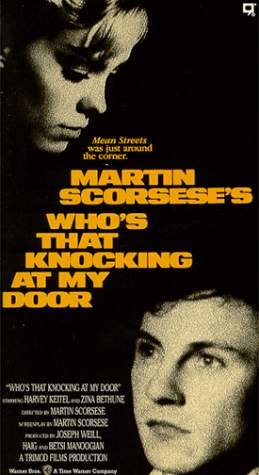
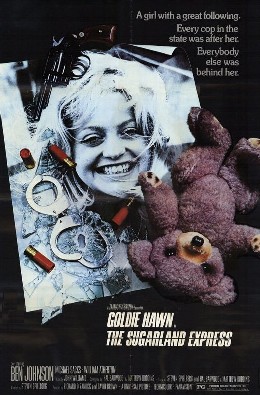
The Historian: Three Debut Films – Scorsese, Spielberg, & Malick

Who-s-that-knocking-at-my-door_1 The_Sugarland_Express_(movie_poster) Badlands_movie_poster


By Spencer. Sometimes a film is less important for what it is, and more important for what it signals to come. Thanks to Turner Classic Movies, I recently had the opportunity to see the debut films of three of my favorite directors: Martin Scorsese, Steven Spielberg, and Terrence Malick. What struck me is how, even in the formative moments when these auteurs were still learning their way around a camera much less a set or an editing room, you can still see the unmistakable signature they would each imprint on their future body of work.  Continue reading

The Historian: Smashing Pumpkins Discography, Vol. 1 (1991-1994)

Smashing Pumpkins 90sBy Spencer. I’ve often wondered what it would be like to meet Billy Corgan, the man who almost single-handedly provided the soundtrack to my teenage years. The songs that bury themselves inside you at that age – the ones you listened to in your bedroom, over and over and over, until you didn’t even need to hear them anymore because you could play them note-for-note in your mind; the ones you blasted from the stereo of your first car; the ones that made you play air guitar when nobody was looking; the ones that still recall the faces of once-perfect girls and broken hearts and the first desperate fumblings of love – those are the songs that never leave you. Even now, in my early thirties, I can still listen to Smashing Pumpkins (and yes, in my mind, they will always be Smashing Pumpkins; forget the extraneous “the” they added to their name in later years) and instantly feel that sublime twinge of pain and comfort called nostalgia, and know that nothing in my life from here on out will ever mean as much to me as the music of those years.  Continue reading

The Critic: Tom Hardy in Locke

locke-poster1By Spencer. One of the more surprising (and satisfying) parts of growing up is that shift that happens when you realize you now enjoy the talking scenes in movies more than the ones where shit blows up. If you don’t know what I’m talking about, then you might want to skip Locke, the new one-man movie from director/writer Steven Knight and star Tom Hardy. Because while shit definitely blows up, it’s only in the dialogue and in the vivid emotions that Hardy and Knight squeeze out of one late night drive between Birmingham and London.

Locke is like no movie you’ve ever seen. Ever. If you’ve been missing the days of intelligent films for adults, make time on your summer movie calendar for something different, something … real.  Continue reading

The Mixologist: Songs About Girls, Vol. 1

heart_blue_wood copyBy Spencer. For our inaugural mix on S&N, we start in the same place as all those mixtapes we used to make back in high school: with a bunch of songs about girls.

Those were the days when a snippet of a lyric so perfectly described the way you felt about someone that you were just sure it was speaking directly to you. And those are the songs that stay with you a lifetime – long after that person you thought you’d never stop loving is just a pleasant memory.

Each of these songs is about someone. And while I include them each with someone particular in mind, the beauty of it is that a couple of them might just spark a memory of your own particular someone?  Continue reading